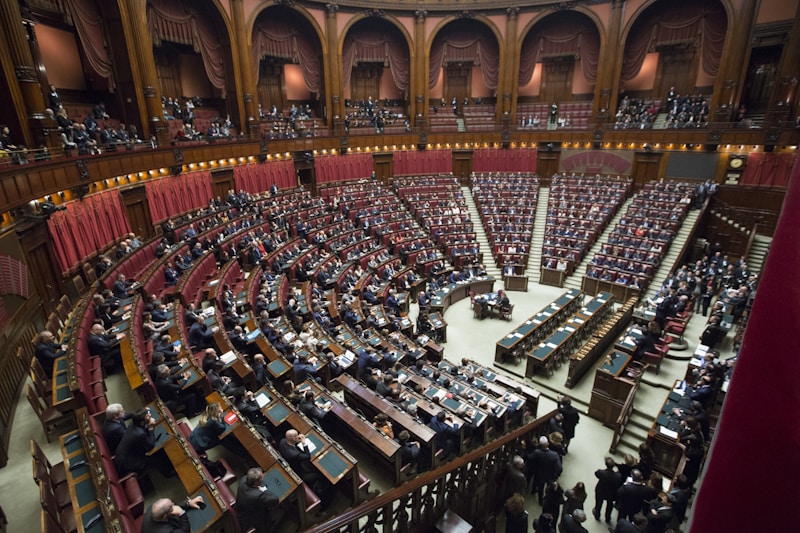

The question at the heart of this article - The Philippines' Weak Party System and Personality-Driven Politics - has moved from the margins of party research to its centre. Across Colombia and South Africa, the evidence suggests that the party's role as intermediary, organizer, and representative is being quietly rewritten.
The Institutional Setting
Crisis moments reveal the underlying logic of a party system. The response of the opposition alliance to recent pressure exposes both its resilience and its blind spots.
Comparative research suggests the trajectory is neither linear nor uniform. Colombia and South Africa illustrate two paths through the same structural conjuncture, and the difference often turns on institutional design as much as political will.
Competition and Coalitions
Data and fieldwork converge on a sobering conclusion: the advantages of incumbency within the opposition alliance are real but erodable, and opposition renewal depends on organizational innovation rather than mere dissatisfaction.
Institutions outlast leaders, but only if someone tends them; the opposition alliance is a case study in what happens when that care lapses.
Prospects for Institutionalization
Future research should treat Colombia and South Africa as natural experiments in party adaptation, comparing how similar shocks produce divergent outcomes depending on inherited institutions.